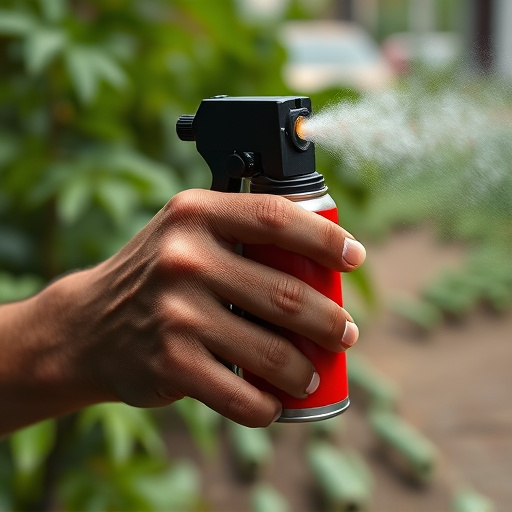
Capsaicin, the active ingredient in chili peppers, offers a novel and safer approach to crowd control compared to pepper spray and Tasers. While pepper spray irritates eyes and respiratory system, capsaicin directly targets the nervous system, inducing pain and temporary numbness. This disrupts aggressive behavior swiftly without lasting damage. Tasers, using electrical current, also have non-lethal impact but face criticism for potential side effects. Both tools have unique advantages: pepper spray for quick vision and breathing impairment, Tasers for longer de-escalation. Proper training is crucial to ensure safety and prevent harm when using either.
“Discover the revolutionary potential of Capsaicin-based inflammatory crowd control spray, a game-changer in public safety. This article delves into the science behind capsicum’s inflammatory properties, offering a unique perspective on its role in crowd management. We compare it with traditional pepper spray and Tasers, exploring their respective effectiveness and safety profiles. Uncover the advantages and limitations of each, considering key factors that shape their impact on crowd control scenarios, especially in terms of Pepper Spray Vs Taser Effectiveness.”
- Understanding Capsaicin: The Inflammatory Agent
- Pepper Spray vs. Taser: A Comparative Analysis
- Crowd Control: Effectiveness and Safety Considerations
Understanding Capsaicin: The Inflammatory Agent
Capsaicin, the active ingredient in chili peppers, is a powerful compound that has gained attention for its potential in crowd control applications. Often compared to pepper spray and Tasers, capsaicin stands out as an inflammatory agent. Unlike pepper spray, which irritates the eyes and respiratory system, capsaicin directly targets the nervous system, causing intense pain and temporary numbness. This makes it particularly effective in de-escalating aggressive or violent situations, as it can quickly disable individuals without causing lasting harm.
In terms of Pepper Spray Vs Taser Effectiveness, capsaicin offers a unique approach to crowd control. While pepper spray is designed to impair vision and breathing, capsaicin activates pain receptors, leading to a strong reaction from the body. This method not only disrupts aggressive behavior but also provides an opportunity for law enforcement or security personnel to gain control of the situation more swiftly and safely.
Pepper Spray vs. Taser: A Comparative Analysis
In the realm of crowd control, Pepper spray and Tasers are two prominent tools often compared for their effectiveness. When it comes to Pepper Spray vs. Taser in terms of effectiveness, each has its unique advantages. Pepper spray, a capsaicin-based inflammatory agent, creates a burning sensation upon contact with eyes, skin, or respiratory system, temporarily disabling individuals. Its non-lethal nature makes it a preferred choice for law enforcement in certain situations.
On the other hand, Tasers, which use electrical current to disrupt muscle control, offer a different approach. While they are also non-lethal, Tasers have been criticized for potential side effects and the possibility of causing permanent damage if misused. In comparison, pepper spray presents a quicker response time in crowd dispersion, making it a more immediate solution. However, the effectiveness of both is context-dependent, as factors like weather conditions, target resistance, and distance can influence their performance.
Crowd Control: Effectiveness and Safety Considerations
Crowd control is a delicate balance between effectiveness and safety, especially when employing non-lethal tools like capsaicin-based inflammatory crowd control sprays or Tasers. When compared to pepper spray, Tasers have gained popularity for their ability to temporarily incapacitate individuals through muscle contractions. However, both methods have distinct advantages and drawbacks.
In terms of effectiveness, pepper spray can quickly disrupt vision and breathing, enabling law enforcement to gain control of a situation. It’s non-lethal and often less costly than Tasers. Conversely, Tasers provide a longer-lasting effect and are particularly useful in de-escalating aggressive or emotionally charged scenarios. Yet, safety concerns regarding over-use and potential harm to bystanders exist, necessitating rigorous training and protocol adherence.
In examining pepper spray versus Tasers for crowd control, it’s evident that each has unique advantages. Capsaicin-based pepper spray is an effective inflammatory agent, causing temporary yet potent sensory overload and disorientation in targets. It offers a non-lethal approach with minimal risk of physical injury. On the other hand, Tasers provide muscular immobilization through electrical impulsing, rendering subjects incapable of movement for a brief period. While both methods have proven effectiveness in crowd control scenarios, the choice between pepper spray and Tasers ultimately depends on specific tactical needs, considering factors like potential threat levels, environmental concerns, and operational safety. Research and training are crucial to ensuring these tools are used responsibly and efficiently.