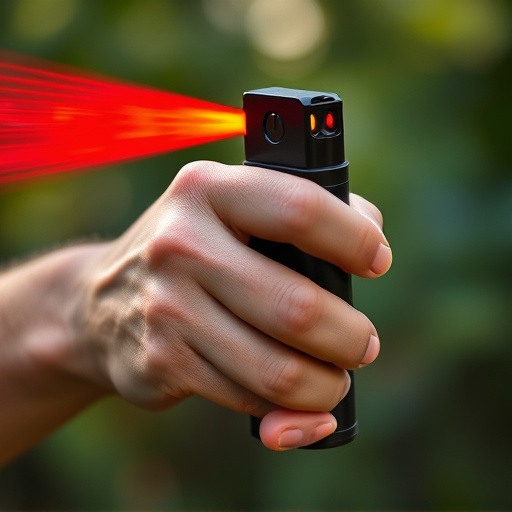
The text compares pepper spray and tasers as non-lethal personal protection tools, highlighting their distinct mechanisms and effectiveness. Pepper spray uses capsaicin for temporary blindness and respiratory distress over several minutes, while tasers employ electric current for immediate muscle control with precise aiming required. The optimal choice depends on individual needs, risk assessments, and deployment contexts, such as close-quarters combat or broader protection scenarios, balancing pros and cons in terms of coverage, immobilization time, reliability, and local regulations regarding self-defense tools.
Personal protection devices like pepper spray and tasers utilize chemical irritants to deter attackers, offering individuals a crucial line of defense. Understanding the science behind these substances—how they work and their distinct mechanisms—is key to evaluating their effectiveness. This article delves into the world of chemical irritants, comparing the prowess of pepper spray and tasers in personal safety scenarios. We explore essential factors to consider when choosing between these devices, empowering readers to make informed decisions for optimal protection.
- Understanding Chemical Irritants: The Science Behind Pepper Spray and Tasers
- Pepper Spray vs. Taser: Evaluating Their Effectiveness in Personal Protection
- Considerations for Choosing the Right Device: Factors to Weigh for Optimal Safety
Understanding Chemical Irritants: The Science Behind Pepper Spray and Tasers
Chemical irritants, such as pepper spray and tasers, are crucial components in personal protection devices. These substances work by provoking a sensory response in the target, temporarily impairing their ability to cause harm. Pepper spray, for instance, uses capsaicin, the active ingredient in chili peppers, to stimulate nerve endings, leading to pain, teary eyes, and difficulty breathing. In contrast, tasers employ a different mechanism using electrical current to disrupt muscle control, causing the target to drop due to muscular spasms.
When comparing pepper spray vs. taser effectiveness, it’s essential to understand their unique properties. Pepper spray offers a non-lethal way to disable an attacker for a short period, making escape or intervention possible. Tasers, on the other hand, provide immediate control over aggressive individuals but carry potential risks and may not always be effective in certain situations or against heavily armed opponents. The choice between these two depends on specific needs, risk assessments, and the context in which they’ll be used.
Pepper Spray vs. Taser: Evaluating Their Effectiveness in Personal Protection
When it comes to personal protection devices, Pepper spray and Tasers are two commonly used options. Each has its own unique advantages and disadvantages when it comes to effectiveness. Pepper spray, an aerosolized capsaicin solution, is designed to cause temporary blindness, coughing, and difficulty breathing in the target, rendering them temporarily immobilized. Its primary strength lies in its non-lethal nature and ease of use; a simple spray can stun an assailant for several minutes, providing ample time for escape or help arrival.
On the other hand, Tasers (or Electronic Control Devices) use electric current to disrupt muscle control, resulting in temporary paralysis. While they are also non-lethal weapons, Tasers require direct contact or a precise shot to be effective, which could prove challenging in certain situations. Compared to pepper spray, Tasers may offer slightly longer duration of effect and can be more reliable in extreme weather conditions. However, the effectiveness of both depends heavily on factors like distance, target’s physical condition, and environmental conditions, making them suitable for different personal protection scenarios.
Considerations for Choosing the Right Device: Factors to Weigh for Optimal Safety
When selecting a personal protection device, understanding its chemical irritant composition is key to ensuring optimal safety. One common option is pepper spray, known for its effectiveness in causing temporary blindness and discomfort, deterring potential attackers. However, when compared to Tasers, which use electrical impulses to disrupt muscle control, the choice becomes nuanced. While pepper spray offers a wide range of coverage, Tasers are powerful in close-quarters combat, allowing users to disable an assailant quickly.
Factors to weigh include the device’s range, duration of effect, ease of use, and legal considerations. Pepper spray, for instance, may be more suitable for personal spaces or situations where a wider area needs protection. Tasers, on the other hand, excel in controlled environments like law enforcement scenarios, where accuracy and speed are paramount. Ultimately, the right device depends on individual needs, environment, and local regulations surrounding self-defense tools.
When it comes to personal protection, understanding the differences between pepper spray and tasers is key. Both have proven effectiveness in deterring potential threats, but each operates uniquely. Pepper spray causes temporary blindness and irritation, rendering the target immobilized for a short period. Tasers, on the other hand, use electrical current to disrupt muscle control, allowing users to disable aggressors safely. The choice between them depends on individual needs and risk assessments. Weighing factors like intended use, potential threat levels, and personal comfort ensures you select the optimal device for maximum safety. Remember, knowledge and preparation are crucial in staying protected.